Relationships and Adaptation
Grexes and Agrobiodiversity Part 2: Whipple Bean

This article is Part 2 of a series on citizen plant breeding, focusing what we can actually do about climate adaptation in our own gardens and with our own hands. Click here for Part 1.
The Agrarian Sharing Network (ASN) is a dispersed collective of seed savers, orchardists, plant geeks, and communitarians with the shared goal of increasing the agrobiodiversity of food crops in the Southern Willamette Valley bioregion.
One of the founders of the ASN, Nick Routledge, schooled me on the history of the organization:
The Eugene Permaculture Guild hosted an annual seed swap and plant give-away in Eugene, Oregon in the mid-1990s. This morphed into the Lane County Propagation Fair in 2008, when some of the core organizers began adding scionwood, rootstocks, and fruit tree grafting to what was becoming a large regional event. Nick Routledge, Chris Homanics, and Brendan Lynch started a Facebook group (the first use of the name “Agrarian Sharing Network”) in 2014 to help them organize the months of behind-the-scenes work needed to provide materials for fruit tree propagation.
Nick says, “In traditional cultures, seed swaps were seen as nurturing relationships both within a community and between communities. Within four years of setting up the Lane County Propagation Fair, we became the largest Prop Fair in the country: 1,500 people attended one event. It was madness. People were pushing and shoving at the seed tables; grafting lines went around the block. People were literally throwing money at us. Chris and I left that event and said, ‘Never again.’
“What we wanted was to build ecological relationships, so we dispersed into multiple local community events. The theory was that this would create deeper relationships, both between people at the smaller events and between humans and their ecosystems. This has actually happened: folks with different political views have grown to love each other as we work together to build bioregional food security.”
A seed swap is a place where you can take the unused seeds from open seed packets, give them away, and pick up new seeds for your garden. People who save seed and breed vegetables also bring their genetic material to give away. Seed companies make donations to swaps. You don’t have to bring seed in order to take seed. In fact, despite its use in common parlance, Nick doesn’t particularly like the term “seed swap.”
“It should be called something else, because it isn’t an economic interaction; it isn’t inherently an exchange. It’s a communal bonding event, an opportunity to share in the abundance modeled for us by Nature.”
Nature gives wealth away. If we are listening, we will also give wealth away, in a cycle of reciprocity that can create a new (old) culture of mutual thriving. As Robin Wall Kimmerer writes in her article, The Serviceberry: An Economy of Abundance:
In the presence of such gifts, gratitude is the intuitive first response. The gratitude flows toward our plant elders and radiates to the rain, to the sunshine, to the improbability of bushes spangled with morsels of sweetness in a world that can be bitter.
Gratitude is so much more than a polite “thank you.” It is the thread that connects us in a deep relationship, simultaneously physical and spiritual, as our bodies are fed and spirits nourished by the sense of belonging, which is the most vital of foods. Gratitude creates a sense of abundance, the knowing that you have what you need. In that climate of sufficiency, our hunger for more abates and we take only what we need, in respect for the generosity of the giver.
If our first response is gratitude, then our second is reciprocity: to give a gift in return. What could I give these plants in return for their generosity? It could be a direct response, like weeding or water or a song of thanks that sends appreciation out on the wind. Or indirect, like donating to my local land trust so that more habitat for the gift givers will be saved, or making art that invites others into the web of reciprocity.
Gratitude and reciprocity are the currency of a gift economy, and they have the remarkable property of multiplying with every exchange, their energy concentrating as they pass from hand to hand, a truly renewable resource. I accept the gift from the bush and then spread that gift with a dish of berries to my neighbor, who makes a pie to share with his friend, who feels so wealthy in food and friendship that he volunteers at the food pantry. You know how it goes.
Let’s not forget that those serviceberries are the sweet package around the seeds, the plant’s way of ensuring new generations grow by attracting animals to share in nutritional abundance (and spread the seeds to new soils when they poop). We can re-learn this type of give-away, the kind that nurtures others while also ensuring our own continuance—a reciprocal dance in which we trust that our giving will return to us, or be passed on to others, in a positive cycle of nourishment.
In this spirit, the ASN wanted to create a circular seed economy. If we shared high-value locally-adapted genetics, people could grow them in their gardens and return seed to future swaps. Sometimes this works out perfectly—see the video linked further down in this article. But it also isn’t so easy.
Many people grow gardens without knowing how to save seed. Or they save seed without knowing how to clean and store it. Or they don’t understand about isolation distances or selection events or intentional genetic stewardship. These are easy things to learn, but they are not widely taught in our urban-centric communities. They are best learned by direct relationship with both plants and human mentors.
Nick realized that putting high-value locally adapted seed on the tables to give away amounted to, as he puts it, “idealistic performative nonsense” if the seed’s lineage didn’t return through the network to future year’s events. Crop seeds need human commitment. We have to close the loop. Nick set to work building deeper relationships with specific seed stewards in order to help the theory work. He named this new effort the ASN Seed Increase Initiative. Nick says:
After 30 years of failing to create a circular seed economy, suddenly we had built enough relationships and enough credibility to crack the code. Seed stewards began following through—not just with easy crops like corn and beans, but with biennial brassicas that take up garden space for two years. We still give away a tremendous amount of seed in order for a minority of those crops to return, but that is the same strategy employed by the plants themselves: make millions of seeds, and expect a handful to grow into plants to continue the lineage.
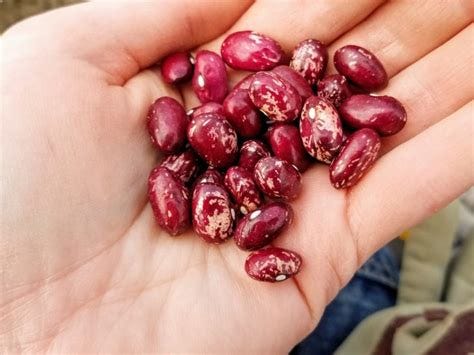
The rest of this article introduces you to one of the ASN SII Seed Stewards, the origin of the Whipple bean, and the power of communal seed sharing.
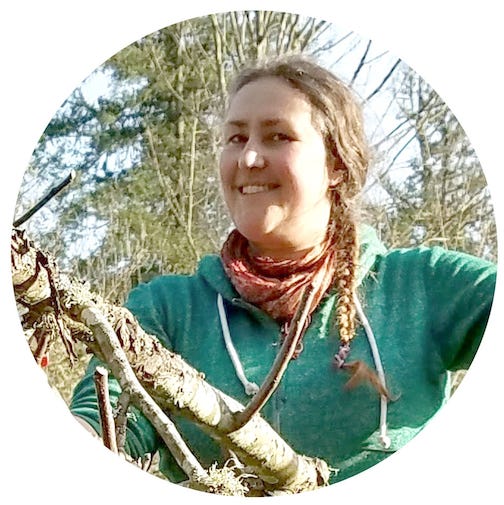
Core ASN collaborator Marjory House is a biodynamic orchardist and teacher of sustainable agriculture. In 1999, she discovered and named the Whipple bean when caregiving for an elderly farmer. I’ll let Linda Ziedrich take the story from here:
Lee and Dana Whipple came to Oregon in the 1970s from Elgin, Illinois, where Lee had been a pastor for the Church of the Brethren, a pacifist Anabaptist denomination that holds the New Testament as its only creed. With other church members, Lee and Dana belonged to a family cooperative, through which they shared the work of raising their kids. . . .
Marjory met Dana Whipple in 1999, the year after Lee died. That’s when Marjory, then a fledgling farmer, arrived in Yoncalla to care for Dana and her farm. Dana was in her eighties, as were all the immediate neighbors, all of them Brethren. The Whipples and the other Brethren had come to the Umpqua Valley together to continue their cooperative arrangements (one, for example, designed houses for the rest). Lee founded a new Church of the Brethren congregation, in Springfield, served as a guest minister elsewhere, and traveled around the area talking to schoolchildren about Martin Luther King and the struggle against racism. Lee and Dana also kept a large garden, a vineyard (for juice, not wine), and an orchard. They devoted a whole room in their house to saving seeds.
Marjory found a bag of the speckled beans in a drawer in the seed room. She asked Dana about them. Dana didn’t have a name for them, but she said that she and Lee had grown them for about fifteen years. She said they were a prolific bush variety, “some type of cranberry bean.” This could be true; cranberry bean is a general term for beans first bred in Colombia as the cargamanto. But Marjory couldn’t find a cranberry bean that looked quite like this bean. So Marjory called it the Whipple.
While Marjory has made a commitment to Whipple beans and is therefore the primary Seed Steward for this variety, the Agrarian Sharing Network seed swaps played a vital role in helping preserve this tasty and well-adapted local bean. Watch this 2-minute video of Marjory House to find out more:
The Agrarian Sharing Network will host six seed swaps and propagation fairs in spring of 2026. If you want to go, check out our website now: the first event was last weekend. https://agrariansharing.net/
If you live local to the Southern Willamette Valley and within easy driving distance of Eugene, you can get on my email list to receive notification of volunteer opportunities for the ASN. These include seed grow-outs, variety trials, and work parties where we sort and pack seeds for the fairs, as well as scion collection, fruit tree pruning workshops, and other free educational opportunities for ASN volunteers. Comment on this article or send me an email if you want to be on the list.
This article series continues in Part 3: Diversity and Adaptation.
I love it that Marjory recovered her Whipple Beans, great story.
oh! seeds! i can see why you attention has been so captivated lately. Thanks for sharing your knowledge and experience with us, Kara!